the best guy
The phrase "the best guy" appears only once in the novel, in the man's dying speech to his son. It is the climax of a lifetime of love and the final articulation of the boy's moral identity. The man, coughing blood and unable to go further, tells the boy: "You're the best guy. You always were." The words are not a casual compliment but a solemn designation, the last thing the man says before he stops talking to conserve his breath. They are the answer to every question the boy has ever asked about whether they are still the good guys, whether they are carrying the fire, whether the world contains any goodness at all.
The Boy as the Best Guy
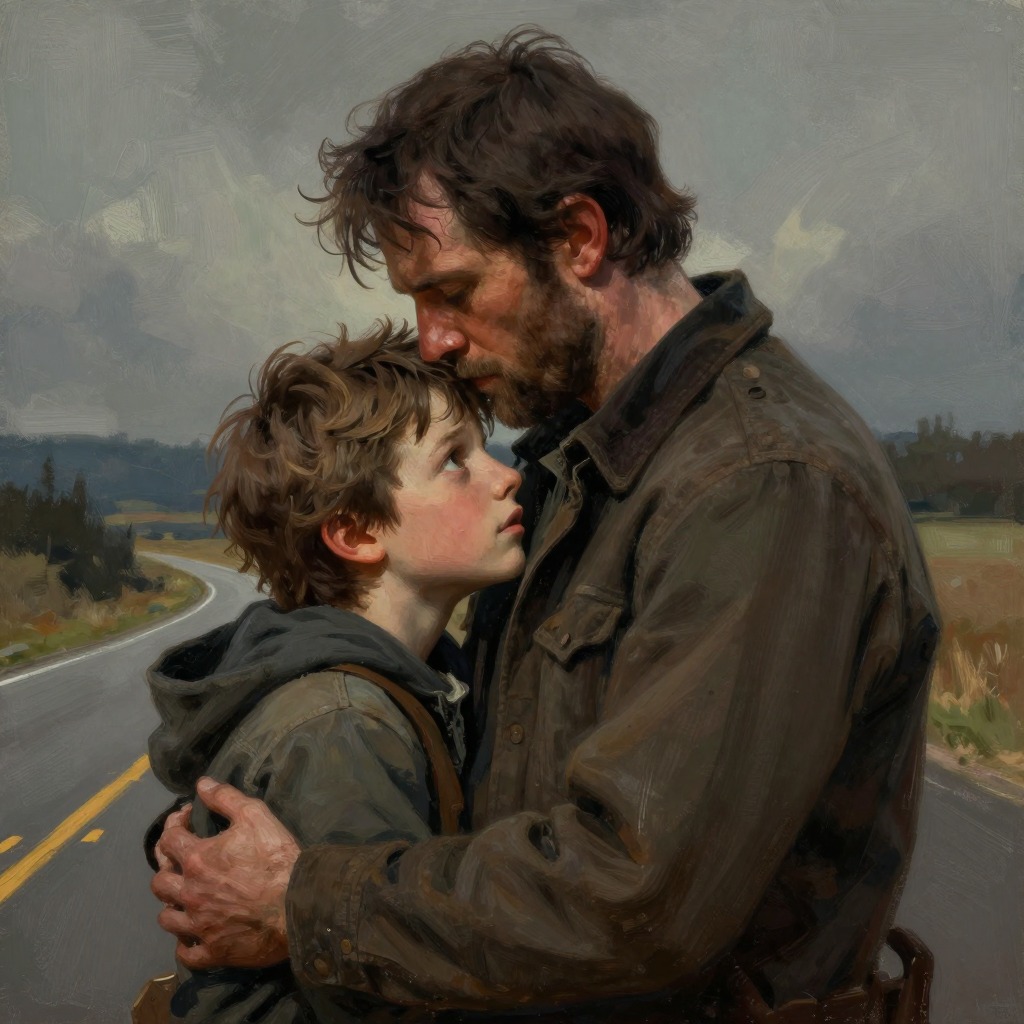
The man's declaration is earned across the entire journey. The boy is the one who insists on helping the old man Ely, who weeps for the little boy he glimpsed across a yard, who begs his father not to kill the thief, who asks whether they would ever eat people even if starving. Each time the man's instinct is survival, the boy's instinct is compassion. The man recognizes this and, in his final moments, names it. The boy is not just good; he is the best, the one who has kept the man from becoming the thing he feared. The man had earlier told the boy, "My job is to take care of you. I was appointed to do that by God." Now, at the end, the boy has taken care of the man, by being the person who made the man's life worth living.
The Context of the Utterance
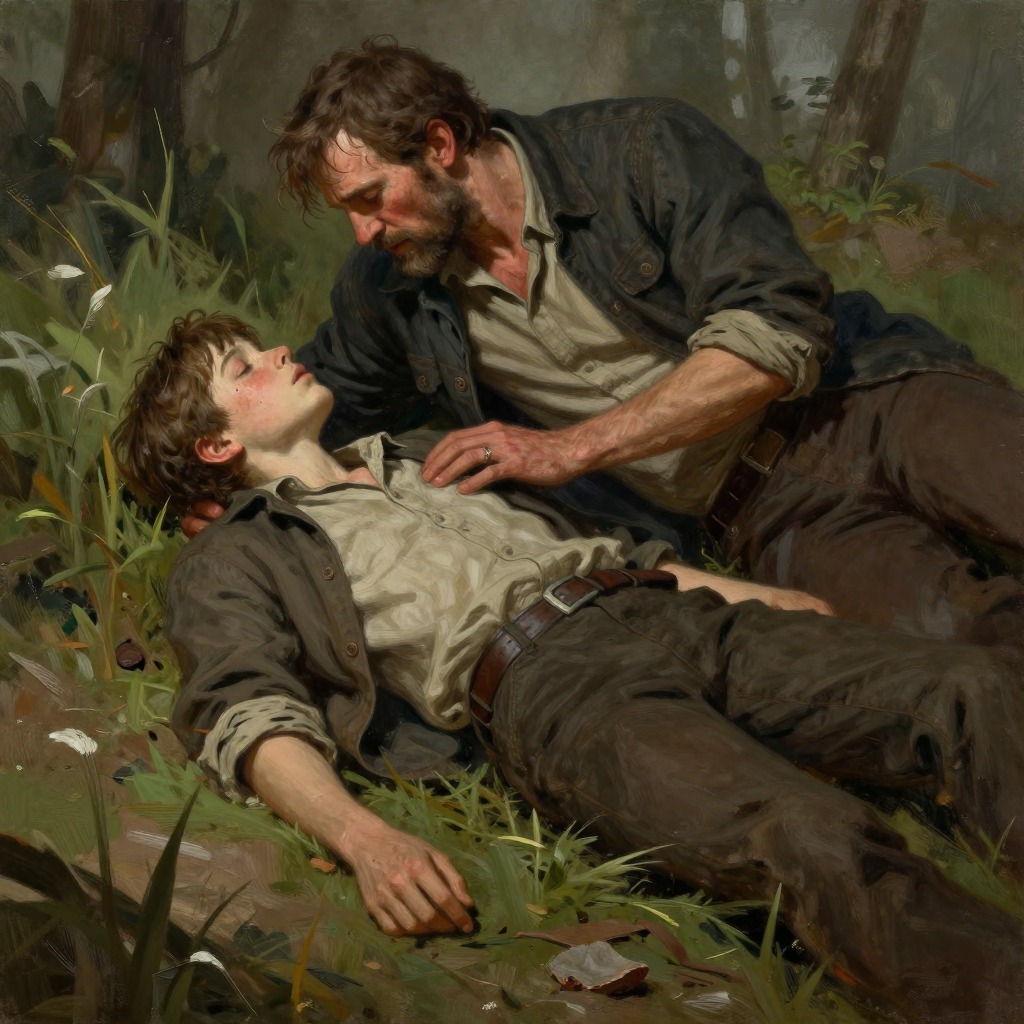
The phrase comes in the novel's penultimate scene, after the man has told the boy he must go on alone. The boy refuses, pleading, "Please, Papa. I cant. I cant hold my son dead in my arms. I thought I could but I cant." The man then gives the boy his final instructions: carry the fire, keep the gun, talk to him in his imagination. Then he says, "You're the best guy. You always were." The words are a summary of everything the man has tried to teach the boy, and an acknowledgment that the boy has surpassed the teaching. The man has spent the novel trying to keep the boy alive; now the boy must keep the man's memory alive, and the man gives him the words to do it.
The Thematic Weight of the Phrase
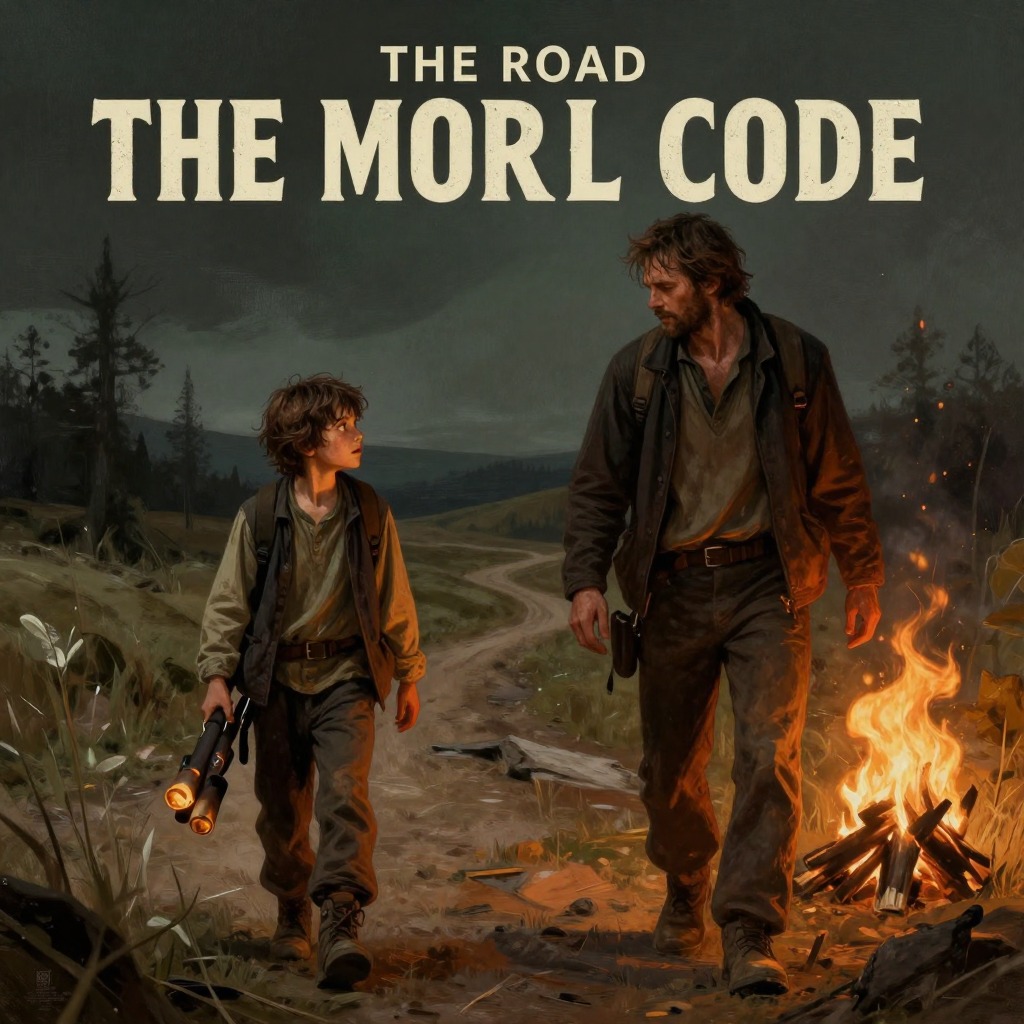
The phrase "the best guy" is the novel's answer to its own darkest questions. The man has wondered if the boy is the word of God, if he is a god, if he is the last god. The boy himself has asked, "Are we still the good guys?" The man's dying words settle the matter: the boy is not a god, not a prophet, not a symbol. He is a person, and he is the best person the man has ever known. The phrase is intimate, domestic, and utterly final. It is the man's last act of love, the one thing he can give the boy that cannot be stolen or eaten: a name for what he is. The boy will carry that name with him when he goes with the new family, and he will talk to his father every day, and he will not forget.
The Afterlife of the Phrase
The boy does not forget. When the good man finds him and asks if he is "carrying the fire," the boy asks in return, "Are you one of the good guys?" The question is the boy's own, but it is shaped by the man's teaching. The boy has internalized the man's final words and made them the measure of everyone he meets. The phrase "the best guy" is not repeated in the novel after the man's death, but it is enacted in the boy's every subsequent action. He goes with the good man, he trusts the good woman, he talks to his father. The phrase becomes the boy's secret name, the one his father gave him, the one he will carry into the unknown future.